
Bankers said on Friday interest rates are likely to be stable in the short term as the liquidity position in the country is comfortable. "Interest rates look stable for the time being... at least till April," O P Bhatt, chairman of State Bank of India, told reporters on the sidelines of Finance Minister P Chidambaram's meeting with bankers in New Delhi.

The report highlights the country's good growth prospects fuelled by ongoing economic liberalisation and strong domestic demand.
Global rating agency Moody's Investors Service on Thursday said the Centre's fiscal deficit, which in the first quarter of 2006-07 crossed 50 per cent of what was projected for the whole year, is a matter of concern.

The Reserve Bank of India's interest rate decision, macroeconomic data and global trends will drive investors' sentiment this week, with markets hoping to continue the positive momentum after ending FY24 on a buoyant note, analysts said. In addition, the trading activity of foreign investors, the rupee-dollar trend and the movement of global oil benchmark Brent crude would also influence trading in equity markets. The 30-share BSE Sensex climbed 14,659.83 points or 24.85 per cent in the 2023-24.

Reserve Bank of India (RBI) on Friday kept the benchmark interest rate unchanged at 4 per cent and decided to continue with its accommodative stance despite rising inflation. This is the 11th time in a row that the Monetary Policy Committee (MPC) headed by RBI Governor Shaktikanta Das has maintained the status quo. RBI had last revised its policy repo rate or the short-term lending rate on May 22, 2020 in an off-policy cycle to perk up demand by cutting the interest rate to a historic low.

A survivalist's mindset sees Indian batsmen fail again on the first day of the SCG Test.

Largecap, flexicap, and balanced advantage funds together recorded a net inflow of Rs 9,363 crore in August, representing a 70% increase from the previous month's total.

Credit rating agencies have been raising red flag over high debt to GDP ratio of India.

While India won't be immune to global spillovers, we need to create the macro preconditions for sustained growth. Policy agility, prudence, and resilience will be key, suggests Sonal Varma.

Mumbai-based developers Macrotech Developers (Lodha) and Oberoi Realty have emerged as top gainers among largecap realty stocks over the past month, with gains ranging from 29 per cent to 33 per cent. Strong ongoing sales trends in Mumbai's core market, record bookings in the January-March quarter, and healthy guidance for 2024-25 (FY25) have propelled these companies, which derive the majority of their revenues from India's financial capital.

'While Indian markets are indeed not inexpensive, the valuations of largecap stocks are still a considerable distance from being overstretched.'

Bajaj Finserv, Infosys, Mahindra & Mahindra, Tech Mahindra, Hindustan Unilever, State Bank of India and HCL Technologies were the biggest gainers. On the contrary, Asian Paints, JSW Steel, NTPC and Adani Ports were among the laggards.

Soon after RBI announcing a much- awaited rate cut, Chief Economic Advisor Arvind Subramanian on Wednesday said that the global rating agencies should look at upgrading their stance on India's credit outlook. "Now we have a 50 basis points rate cut (in two tranches within two months) and I think that is good for the economy and all rate cuts benefits... If the outlook is looking good, the rating agencies should draw their lessons from that om improving the outlook," Subramanian told reporters. After presentation of Union Budget 2015-16 last week, global and domestic agencies had ruled out any immediate upgrade in India's sovereign ratings and had red-flagged the country's delayed fiscal consolidation roadmap and had also warned against any slippages from the "ambitious" disinvestment plan proposed in Budget. Subramanian said that the rate cut is consistent with the government's views in the last week's Economic Survey and thereafter in the Union Budget for the outlook on inflation and for the outlook on overall economy. "It (rate cut) shows that RBI and government are on the same page in terms of how we view the economy. It also means that Budget can be seen as conducive to non-inflationary growth," he added. On monetary policy framework agreement, Subramanian said that both Finance Ministry and RBI have shared concern about inflation. Recently, the Finance Ministry and the Reserve Bank agreed to 'inflation rate targeting' under which the apex bank will aim to lower retail inflation to below 6 per cent by January 2016.

Corporate India is indicating cautious hiring in the March quarter of 2023 as concerns rise over possible recession and steady inflation, a survey said on Thursday. According to the ManpowerGroup Employment Outlook Survey, based on interviews with nearly 3,030 public and private employers, hiring intentions will decrease in the quarter both on year-on-year and quarter-on-quarter basis. During the quarter, 48 per cent employers expect to increase their staffing levels, 16 per cent anticipate a decrease in hiring intent and 34 per cent do not anticipate any change in hiring, resulting in a net employment outlook of 32 per cent.

While most analysts are expecting poor results from oil marketing companies (OMCs) in the first quarter of 2024-25 (Q1FY25) and even in the first half (H1) of FY25, GAIL (India) could be an outlier. Upstream producers, Oil and Natural Gas Corporation (ONGC) and Oil India (OIL) could do well due to strong crude and gas prices, but refiners are likely to see weak margins and the impact of frozen prices during the election period will also be negative.
The announcement by Standard & Poor's (S&P) on Wednesday to cut its outlook for India from stable to negative should cause no surprise, even though it comes barely five days after a similar exercise by Moody's, which had retained its outlook on India as stable.

The Reserve Bank of India (RBI) on Wednesday raised the benchmark lending rate by 35 basis points to 6.25 per cent in a bid to tame inflation, which has remained above its tolerance level for the past 11 months. With the latest hike, the repo rate or the short-term lending rate at which banks borrow from the central bank now has crossed 6 per cent. This is the fifth consecutive rate hike after a 40 basis points increase in May and 50 basis points hike each in June, August and September.

IndiGo has delivered impressive operating performance in the past six quarters as it navigated cost and capacity challenges. It has managed to mitigate the impact of faulty engine-related groundings. The airline has also managed costs related to grounding, expensive secondary leasing, increasing airport charges, and pilot compensation inflation and delivered stronger yields and spreads.

There has been no change in Tata Steel's strategy on operations in the United Kingdom (UK), company chairman N Chandrasekaran has told shareholders. The statement comes amid growing concern about the restructuring plan in the face of change in government in the UK. Tata Steel's plan for the UK entailed a 1.25 billion investment plan agreed upon by the Conservative party-led government in September last year.

As the results season kicks in, the quarterly earnings numbers of several blue-chip firms -- such as Infosys and Reliance Industries -- along with global trends and trading activity of foreign investors, will determine equity market movement in the holiday-shortened week ahead, according to analysts. The domestic WPI inflation data for June -- scheduled to be announced on Monday -- will also influence trading sentiments, traders said. Markets will remain closed on Wednesday for Muharram.

India's services activity expanded at the fastest rate in a year during February, while employment fell further and companies noted the sharpest rise in overall expenses, a monthly survey said on Wednesday. The seasonally adjusted India Services Business Activity Index rose from 52.8 in January to 55.3 in February, pointing to the sharpest rate of expansion in output in a year amid improved demand and more favourable market conditions. The index was above the critical 50 mark that separates growth from contraction for the fifth month in a row during February as the roll-out of COVID-19 vaccines led to an improvement in business confidence towards growth prospects.

The news of Dixon Technologies (India)'s tie-up with HP in addition to its existing Lenovo and Acer partnerships has led to a 5 per cent stock uptick since the start of the week. Dixon can target roughly 60 per cent of India's addressable IT hardware market with these contracts. Dixon targets Rs 48,000 crore in revenue from IT hardware under the PLI scheme over the next six years.
Fitch says possibility of downgrading India's sovereign rating is more than 50 per cent.

Retail inflation increased to four-month high of 5.08 per cent in June as food items, including vegetables became dearer, according to government data released on Friday. The Consumer Price Index (CPI) based retail inflation was on a decline since January, before rising again in June. The CPI-based retail inflation was 4.8 per cent in May 2024 and 4.87 per cent in June 2023.

Trends in the global energy markets are crucial if India's growth outlook is to remain healthy. Prices for the Indian crude basket were averaging around $86.2 per barrel through Q1FY25 and then moderated to $84 in July and to $78-79 in August (so far). But global crude supply may outpace weak global demand in the short term.
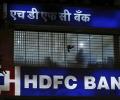
HDFC Bank Q4 review: HDFC Bank's January-March quarter (Q4) results, for financial year 2022-23 (FY23), brought no cheer to investors as elevated costs, and merger-related uncertainties continue to dent the sentiment. Moreover, analysts fear that merger-related costs may put pressure on margins and cost to income ratio in the near-term, while the return on equity could moderate owing to low leverage of the parent. Analysts, therefore, opine that the stock's re-rating may be some time away. "While the risk of a de-rating on a standalone basis appears to be quite low given that the business performance is holding up well, we believe a re-rating in the stock would happen as and when more clarity emerges on the smooth transition (merger)," said a report by Sharekhan.

India Inc's net profit as a percentage of the country's gross domestic product (GDP) is just shy of reaching 5 per cent, bolstered by strong earnings growth in the second quarter of 2023-24. Analysts interpret this as an indication that a corporate profit upcycle is in progress, with projections suggesting that this share could exceed 8 per cent within the next five years, driven by bullish earnings growth expectations. "We believe we are only halfway through a profit cycle, with the profit share in GDP rising from a low of 2 per cent in 2020 to about 5 per cent currently, and likely heading to 8 per cent in the coming four to five years. "This implies about 20 per cent compounding of earnings growth. "Underscoring this forecast is the start of a new private capex cycle, under-geared balance sheets, a healthy banking system, lower corporate tax rates, improving terms of trade, and structural consumption demand outlook albeit somewhat offset by likely consolidation in government deficit," said Ridham Desai, managing director, head of research, Morgan Stanley India in a note.

Inflation trajectory, domestically as also globally, is what will shape the economy, and therefore the market, over the next couple of quarters.'

India's manufacturing sector growth climbed to a four-month high in January as a sharper upturn in new orders boosted output growth amid mild cost inflation, a monthly survey said on Thursday. The seasonally adjusted HSBC India Manufacturing Purchasing Managers' Index (PMI) recovered from an 18-month low of 54.9 in December to 56.5 in January. The latest reading highlighted the strongest improvement in the health of the sector since last September.

Fitch Ratings on Thursday said the resurgence of COVID-19 infections may delay India's economic recovery, but won't derail it, as it kept the sovereign rating unchanged at 'BBB-' with a negative outlook. It projected a 12.8 per cent recovery in GDP in the fiscal year ending March 2022 (FY22), moderating to 5.8 per cent in FY23, from an estimated contraction of 7.5 per cent in 2020-21. Fitch had in June last year revised outlook for India to 'negative' from 'stable' on grounds that the coronavirus pandemic had significantly weakened the country's growth outlook and exposed the challenges associated with a high public debt burden.
India's manufacturing sector activity moderated in April, but still recorded the second fastest improvement in operating conditions in three-and-a-half years supported by buoyant demand, a monthly survey said on Thursday.

The official said the finance ministry will impress upon rating agencies the resolve of the government to contain fiscal deficit at 4.1 per cent this year and lower it to 3 per cent by 2016-17.

Market players attribute the rally in small and midcaps to flows from retail investors and domestic institutions.

India has pitched for a sovereign credit rating upgrade with Fitch Ratings, after announcing its budget last month.

In FY23, Indian operations accounted for 41.6 per cent of the consolidated revenue of India's top five multinationals, up from 34 per cent in FY18 and 33.2 per cent and 34.2 per cent in FY21.

Risk-averse investors can hold up to 10 per cent of their portfolio in gold, while aggressive ones can keep five per cent.
India's services sector activities improved further and expanded at strongest rate in over 11 years in May, supported by a substantial pick-up in new business growth, even as input cost inflation climbed to a record high, a monthly survey said on Friday. The seasonally adjusted S&P Global India Services PMI Business Activity Index jumped to 58.9 in May, up from 57.9 in April, amid better underlying demand and strong inflows of new work. For the tenth straight month, the services sector witnessed an expansion in output.

Tata Steel was the top gainer in the Sensex pack, climbing 2.11 per cent, followed by Infosys, HDFC Bank, HDFC, Kotak Bank, M&M and PowerGrid. NSE Nifty jumped 142.05 points to end at 17,605.85.

'Markets could face uncertainty in the short to medium term.' 'It would be prudent to invest in alternative asset classes, especially debt, for about a year.' 'Bank fixed deposits are offering rates as high as 9 per cent per annum and these can be used as a great hedging tool until equity markets stabilise.'

Monetary policy easing, coupled with the relaxation of lending rules and greater election-driven fiscal spending in the first quarter of 2019, will provide some support to growth during the first half of 2019-20 fiscal
 © 2026 Rediff.com - Advertise with us - Disclaimer - Privacy Policy - Sitemap - Feedback - About us - Terms of use - Grievances